This program fosters innovation and collaboration to advance market-based and nature-based solutions (NbS) in the MAR region to develop capacities and promote intersectoral collaboration among diverse leaders, equipping them with knowledge, tools, and networking opportunities to design and implement high-impact projects.
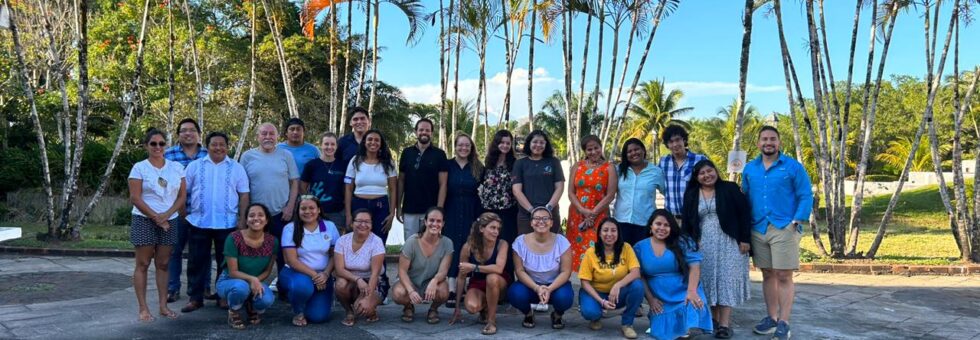
In 2023, the Build & Connect program supported regional leaders developing market initiatives aimed at improving the health and resilience of MAR ecosystems and surrounding communities. Participants received training in design thinking, finance and business models, leadership, and conflict resolution, driving the development of nature-based solutions that promote both biodiversity conservation and human well-being.
2023 Build & Connect FIRST COHORT
Meet the inspirational entrepreneurs selected for the 2023 Cohort of Build & Connect.
Artificial Wetlands | Mexico
This project aims to provide the tourism sector with an ecological wastewater treatment solution through artificial wetlands in the Yum Balam Flora and Fauna Protection Area and its surrounding communities of Chiquilá and Holbox.
Commercialization of Food Algae, Macroalgae | Guatemala
Create new business models to help fishermen transition into food producers through the commercialization of macroalgae.
Recycling for a circular economy | Mexico
Recycling and waste recovery to promote a circular economy, offer a sustainable solution for solid waste management in high-impact tourist areas with fragile ecosystems, primarily focusing on hotels and restaurants.
Recover Akumal Bays’ reef ecosystem through a sustainable coral restoration program and regenerative tourism, fostering environmental awareness and collaboration
Educational Monitoring of Reef Systems (MEDUSA) | Mexico
This project integrates electrolysis and mineral accretion technology with comprehensive coastal modeling, scalable modular reefs, and remote data monitoring for the conservation and monitoring of reef system
Tourism enterprises to Rebuild Coral Reefs | Honduras
The project promotes scientific tourism for the MAR restoration. Participants engage in a week-long expedition, learning about coral reproduction and conservation, participating in dives, and contributing to nursery maintenance.
Go Blue | Honduras
Enhance the value of cultural and natural heritage to build a resilient and sustainable local economy in MAR region marine-coastal protected areas by contributing to the implementation of good environmental practices and empowerment of micro, small and medium-sized tourism enterprises.
Coral Reef Community Restoration | Mexico
A community-based reef restoration program involving highly trained divers in innovative, sustainable coral production techniques, creating new opportunities for coral restoration as a productive activity.
Connecting marine-coastal ecosystem services with innovative markets | Mexico
This project assesses the feasibility of generating carbon and biodiversity credits in the voluntary market to conserve the health of the MAR through an integrated strategy.
Playas Sin Sargazo | Mexico
The objective of the project proposes the use of specially designed machinery to address the sargassum issue in the coastal zone.
Water Test Laboratory | Honduras
Implementation of a self-sustaining environmental services Test Laboratory for water quality monitoring around Roatán Island to sustainable finance the management of protected areas
Women of the Sea and Ecotourism in Sian Ka'an | México
The women-led cooperative commitment is to promote the conservation of marine ecosystems through the practice of non-extractive but recreational and educational economic activities such as tourist services and sport fishing in Punta Herrero.
Lionfish Jewelry Market | Honduras
Promote economic development among women in Utila by creating sustainable souvenirs and jewelry made from the fins of the invasive lionfish, boosting the local economy and engaging the female community.
King Crab Mariculture | México
Take advantage of the Caribbean King Crab, an efficient and selective herbivore in restoration and rehabilitation efforts of coral reefs, by cultivating juvenile king crabs in aquaculture systems to be introduced to the reef and thus improve herbivory in the ecosystem, addressing the problem of macroalgae overgrowth.